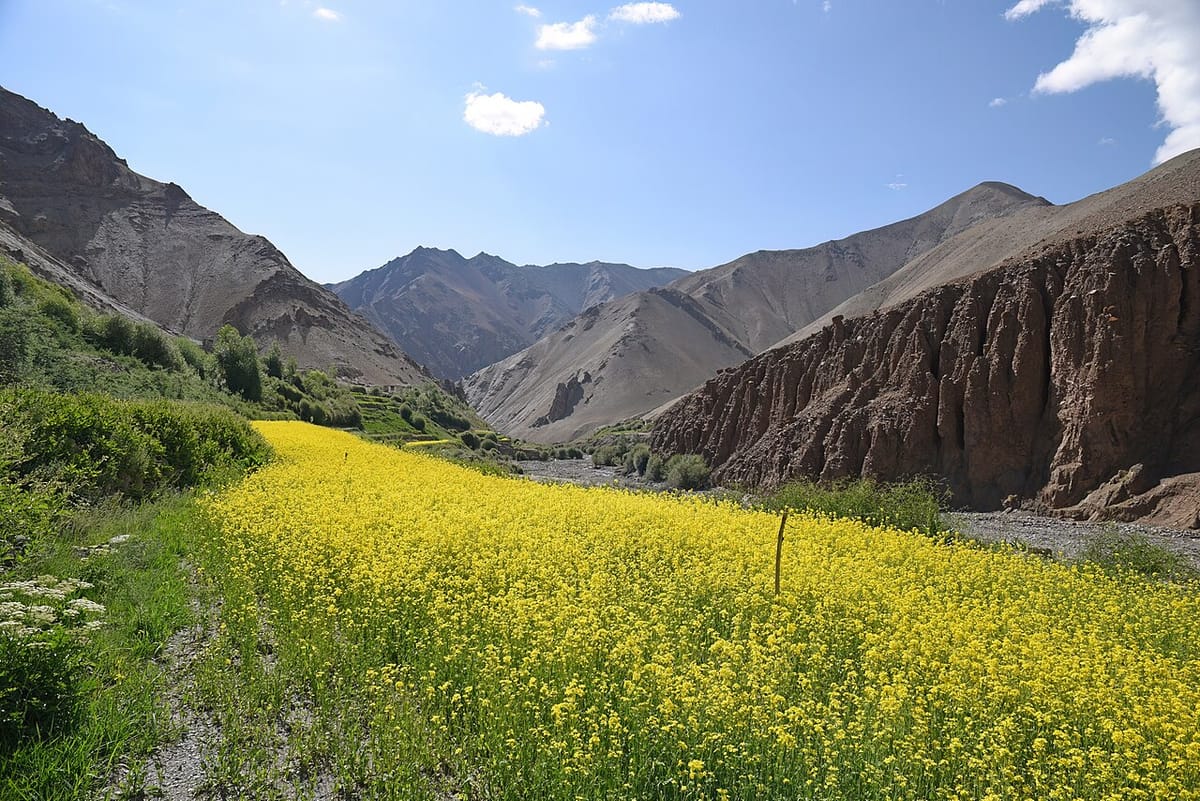
An experimental saffron farm on restored degraded land in Leh, Ladakh, has produced its first flowers within 30 days of planting, Lieutenant Governor Vinai Kumar Saxena said on Sunday. According to Greater Kashmir, saffron usually takes about two months to flower after planting. Nearly 22 grams of pure saffron was collected in the first four days of harvest.
Key points
- Saffron planted in Leh flowered in 30 days, against the usual two months.
- Nearly 22 grams of pure saffron was collected in just four days.
- The trial covers 4,000 square metres and uses 90,000 corms weighing about 800 kg.
- It is part of Project Him Sarovar, launched on October 2.
What the Lieutenant Governor said
Saxena inspected the saffron field in Leh to see the first bloom. He called the early results a significant step for high-altitude farming in the Union Territory. He said they open up the possibility of growing the high-value spice beyond its traditional areas in Kashmir.
In a post on X, he said 20 to 25 flowers were blooming daily on average, and 72 flowers bloomed on the morning of his visit. He described the result as a sign of the strength of the local environment and the untapped potential of farming at high altitude. He also said it lays a promising base for commercial-scale production, new farming and agro-based business opportunities, and a more self-reliant local economy.
The Lieutenant Governor thanked the Agriculture Department of UT Ladakh and its field staff for their contribution to the pilot project.
Details of the trial
Saffron (Crocus sativus), often called "red gold", normally needs around two months to flower after planting. According to the report, Leh's microclimate, strong sunlight and revitalised soil helped trigger a faster growth cycle.
Field officers reported the daily bloom figures, with a peak of 72 flowers on a single morning. This allowed workers to harvest and process 22 grams of high-grade saffron stigmas in under a week. The experiment is spread over 4,000 square metres and involves 90,000 saffron corms weighing roughly 800 kilograms.
Why it matters
The trial is part of Project Him Sarovar, a government initiative to reclaim degraded and lost agricultural land in Ladakh and put it to productive use. The project began on October 2. It aims to test whether saffron can be grown commercially in the cold desert's distinctive agro-climatic conditions.
The early flowering has raised expectations of new livelihood opportunities through high-value farming in the region. The report does not give a timeline for expanding the project or any plans for commercial production. The results so far come from a pilot trial.