Prime Minister Narendra Modi has set India a new clean-energy goal: add about 500 gigawatts (GW) of power from non-fossil sources over the next 10 to 11 years. He announced it on 2 November 2026 at the Bharat Renewable Energy Summit and Expo, and tied it directly to the war and oil shocks in West Asia.
Quick read
- PM Modi wants India to add about 500 GW of non-fossil power in the next 10 to 11 years.
- This is in addition to the existing goal of 500 GW by 2030, which he said is on track.
- India's non-fossil capacity has already crossed 300 GW.
- Modi linked clean energy to energy security amid the West Asia conflict.
That is a big number, so let us break down what it means, where India stands today, and what it could mean for your electricity bill and the air you breathe.
What exactly did the PM say?
Modi said India will add around 500 GW of new non-fossil power generation over the next decade or so. Non-fossil means power that does not come from burning coal, oil or gas, mainly solar, wind, hydro and nuclear.
He also said the renewable energy sector will create investment opportunities of more than ₹20 lakh crore by the end of the decade.
Isn't there already a 500 GW target?
Yes, and this is where it gets confusing. India already has a goal of 500 GW of non-fossil capacity by 2030. The PM said that goal remains on track. The new 500 GW is on top of it, a second big push for the years after.
Where India stands today
According to the PM, India's installed non-fossil power capacity has already crossed 300 GW. Some reports put the figure at about 308 GW. More than half of India's installed power capacity now comes from non-fossil sources, a milestone India reached five years ahead of its 2030 deadline under the Paris climate commitments.
Capacity is not the same as electricity
One thing to keep in mind: installed capacity is not the same as actual power produced. Solar panels do not work at night, and wind is not constant, so a gigawatt of solar produces far less electricity in a year than a gigawatt of coal. Coal still produces most of the electricity India actually uses. Storage, such as large batteries and pumped hydro, is the key to closing that gap.
Why West Asia came up
The PM linked clean energy to national security. The conflict in West Asia has pushed up oil and gas prices and threatened supply routes. India imports most of its crude oil, so every shock in that region hits Indian fuel prices, inflation and the rupee.
"If we remain heavily dependent on fossil fuels in the future, the global economy will continue to be disrupted repeatedly," Modi said. His argument is simple: sunlight and wind produced in India cannot be blocked at a sea strait or priced by a foreign cartel.
He also said India's economic growth remains strong despite the crisis. That is the government's own assessment, and independent data will show over the coming quarters whether it holds.
What it means for you
Jobs and investment
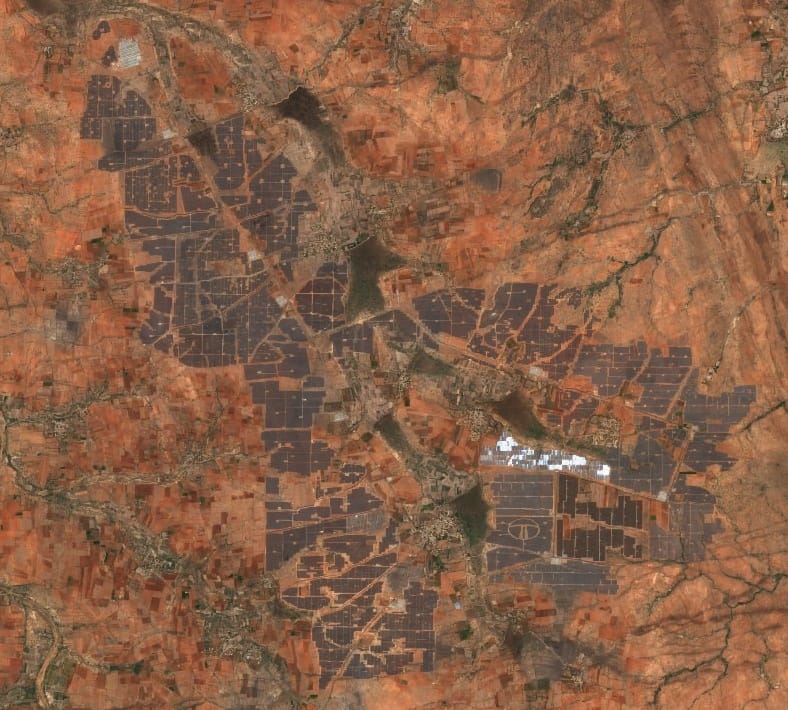
Building 500 GW means millions of solar panels, thousands of wind turbines, new transmission lines and big battery plants. That brings jobs in manufacturing, installation and maintenance, many of them in small towns and rural areas where solar parks are built.
Bills and rooftops
Solar power is now one of the cheapest sources of new electricity in India. Over time, more of it should help keep power costs in check. Households can already benefit through schemes like PM Surya Ghar for rooftop solar, which offers subsidies for home installations.
Cleaner air
Every unit of power that comes from the sun instead of coal means less smoke from power plants, which matters for cities struggling with pollution this winter.
The hard part
Targets are easy to announce and hard to deliver. India will need cheaper storage, stronger power grids, land for projects without displacing farmers, and state electricity companies healthy enough to pay generators on time. Missing any one of these can slow the whole plan.
Still, India has hit big clean-energy targets before. If it does it again, the country of the 2030s will run on a lot more sunlight, and a lot less imported fuel.
Quick questions, quick answers
What counts as non-fossil power?
Electricity from sources that do not burn coal, oil or gas, mainly solar, wind, hydropower and nuclear.
How can a household benefit?
Through rooftop solar. Under the PM Surya Ghar scheme, families can get a subsidy to install solar panels at home.