Imagine being rescued after years of forced, unpaid work at a brick kiln, then waiting months, sometimes years, for the help the law promised you. For many of India's freed bonded labourers, that has been reality. On 2 November 2026, the Supreme Court said this has to stop.
Quick read
- On 2 November 2026, the Supreme Court said rescued bonded labourers should get immediate financial help within seven days.
- Complaints of bonded labour should be verified within 24 hours.
- The Centre and all states must put a standard procedure in place within six months.
- The rehabilitation scheme pays ₹1 lakh to ₹3 lakh depending on the case.
In a judgment in the case of Surendra Manjhi & Anr. v. Union of India & Ors., a bench of Justices Vikram Nath and Aparesh Kumar Singh ruled that immediate financial help for rescued bonded labourers should ordinarily be paid within seven days. The court put it in one powerful line: rehabilitation delayed may, in substance, amount to rehabilitation denied.
What is bonded labour?
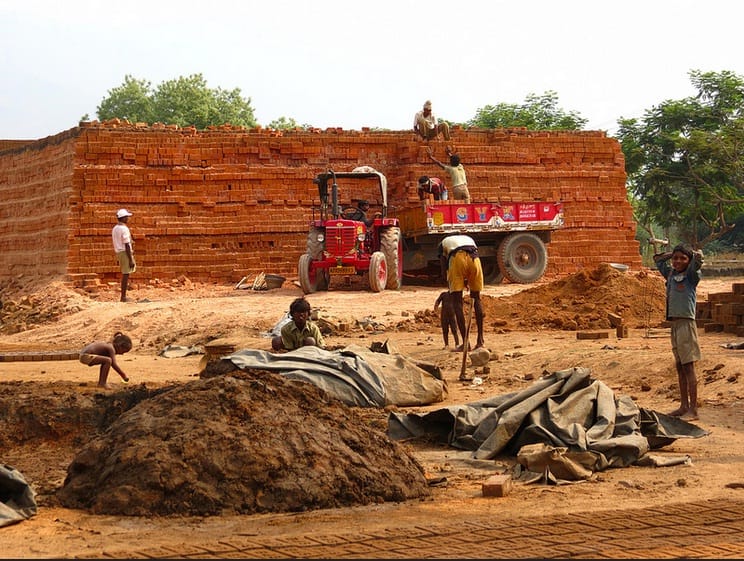
Bonded labour is a form of modern slavery. A worker, often from a poor or Dalit or Adivasi family, takes a small loan or advance. The employer then forces them to work, sometimes along with their whole family, to "repay" a debt that never seems to end. Workers are often not allowed to leave, are paid little or nothing, and live in fear.
India abolished bonded labour by law in 1976. Yet it continues in brick kilns, farms, stone quarries and other informal work, often involving migrant workers moved from one state to another.
What the court ordered
Money within seven days
When a person is rescued, the district administration issues a "release certificate". The court said immediate financial assistance under the government's rehabilitation scheme should normally be paid within seven days of that certificate. The scheme provides between ₹1 lakh and ₹3 lakh, depending on the category of the person rescued.
Complaints checked within 24 hours
Complaints about bonded labour should ordinarily be verified within 24 hours, followed quickly by a rescue if the complaint is found to be true. Delays at this stage can leave people trapped for longer and give employers time to move or hide workers.
Rules for the whole country
- The Centre must implement its standard operating procedure for the law and the rehabilitation scheme within six months.
- All states and Union Territories must take steps to comply within six months.
- The Centre must decide within three months on proposed changes to the scheme, including higher immediate help and an "interim subsistence" payment when benefits are delayed.
Help for the petitioners
In this specific case, Uttar Pradesh and Bihar must jointly verify what the rescued workers are owed within one month and pay it, preferably within three months and in any case within six months. The workers had been trafficked across state lines, a common pattern, and that had left them stuck between two governments.
Why the delay mattered so much
A freed bonded labourer usually has nothing: no savings, no job and often no home to return to. Without quick cash, many fall back into debt with a new moneylender, and the cycle of bondage starts again. Rescue without rehabilitation is not real freedom.
Activists have long complained that money under the scheme gets stuck in paperwork, especially when the worker is from one state and was rescued in another. The court's order directly targets that gap by setting deadlines and making both states responsible.
What happens next
Court orders are only as strong as their implementation. Deadlines of seven days, one month and six months now give rescued workers, lawyers and activists something concrete to point to when officials delay. Families can approach the district magistrate, the State Legal Services Authority or the National Human Rights Commission if payments do not arrive.
If you know of someone being forced to work to pay off a debt, you can report it to the local district magistrate or the police. You can also contact the National Human Rights Commission.
For a country that banned bonded labour nearly fifty years ago, this judgment is a reminder that a law on paper is only the start. The real work is making sure freedom comes with the means to live.
Quick questions, quick answers
Who decided the case?
A bench of Justices Vikram Nath and Aparesh Kumar Singh, in Surendra Manjhi & Anr. v. Union of India & Ors.