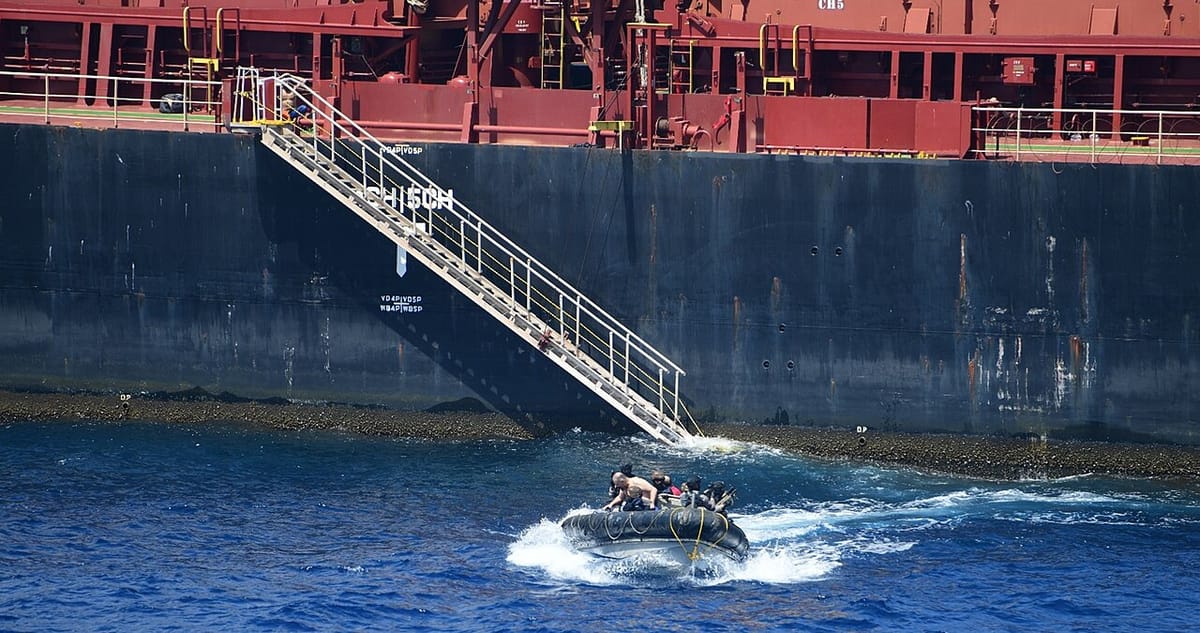
Twenty fishermen from Iran spent days at sea as hostages of armed Somali pirates. On Sunday, 2 November, they were freed by Indian commandos who dropped from the sky more than 3,000 km from Mumbai. Nobody was hurt.
Quick read
- The Indian Navy freed 20 Iranian crew from Somali pirates on 2 November in Operation Azini.
- The fishing dhow Azini was hijacked off Puntland, Somalia, on 29 October.
- An IAF C-17 air-dropped Marine Commandos for the final rescue, more than 3,000 km from Mumbai.
- Nobody was injured. Iran thanked India.
The Indian Navy calls it Operation Azini, after the name of the fishing boat. It took about 48 hours from start to finish. It is also a reminder of how far India's navy now reaches to keep the sea lanes of the Arabian Sea safe.
How the hijacking happened
The Azini is an Iranian fishing dhow, a traditional wooden boat. It was seized on 29 October off the coast of Puntland in north-eastern Somalia, between the towns of Bandar Beyla and Hafun. Puntland security officials said eight armed men first boarded the boat and overpowered two Somali guards on board. Four more pirates joined later, taking the total to 12.
Why pirates want fishing boats
Pirates in this region often grab fishing dhows not for the fish, but to use them as "motherships". A mothership lets small pirate skiffs travel far out to sea and attack much bigger merchant ships. Stopping the Azini early may have prevented attacks on cargo ships passing through one of the world's busiest shipping routes.
Inside Operation Azini
The Navy said it first sent a warship and a maritime patrol aircraft to track the dhow. Once its position was confirmed, the final move came from the air. An Indian Air Force C-17 Globemaster transport plane flew out over the Arabian Sea and air-dropped Marine Commandos, known as MARCOS, close to the target.
The Navy has not shared full details of how the boat was retaken, which is normal for special operations. What it has confirmed is the result: all 20 crew members were rescued, with no casualties and no injuries.
A small question mark
There is one gap in the numbers. The Indian Navy says it freed 20 crew. Puntland's maritime police had earlier said 23 people were on board. It is not yet clear whether the higher figure included the Somali guards or others. We will update this if the Navy clarifies.
Thanks from Tehran
Defence Minister Rajnath Singh praised the Navy and Air Force for the operation. The Iranian embassy in New Delhi posted a message on X thanking India for rescuing its citizens. At a time of war and tension across West Asia, a moment of goodwill between New Delhi and Tehran over a fishing boat is worth noting.
Why this matters for India
A growing record
This is not the first time. Since late 2023, the Indian Navy has stepped up anti-piracy patrols off Somalia and in the Gulf of Aden. It has freed several hijacked vessels, many of them Iranian fishing boats, and in 2024 rescued 23 Pakistani nationals from pirates. Each operation adds to India's reputation as a "first responder" in the Indian Ocean.
Trade and safety
Most of India's trade by volume travels by sea, and a large share passes near the Horn of Africa. A revival of Somali piracy would push up shipping and insurance costs, and in the end prices for ordinary people. Keeping these waters safe is not charity. It protects India's own economy.
What we still don't know
The Navy has not said what happened to the 12 pirates, whether any were arrested, or whether they will face trial in India. In earlier cases, captured pirates were brought to Mumbai and charged under India's anti-piracy law. We will follow up as more details are released.
For now, 20 fishermen are going home to their families. For the sailors and commandos who flew and sailed thousands of kilometres to bring them back, that is the result that matters most.
Quick questions, quick answers
Who are MARCOS?
MARCOS, or Marine Commandos, are the Indian Navy's special forces, trained for operations at sea, in the air and on land.
Why does India patrol waters so far from home?
Much of India's trade passes near the Horn of Africa. Keeping these routes free of pirates protects Indian ships, sailors and the economy.