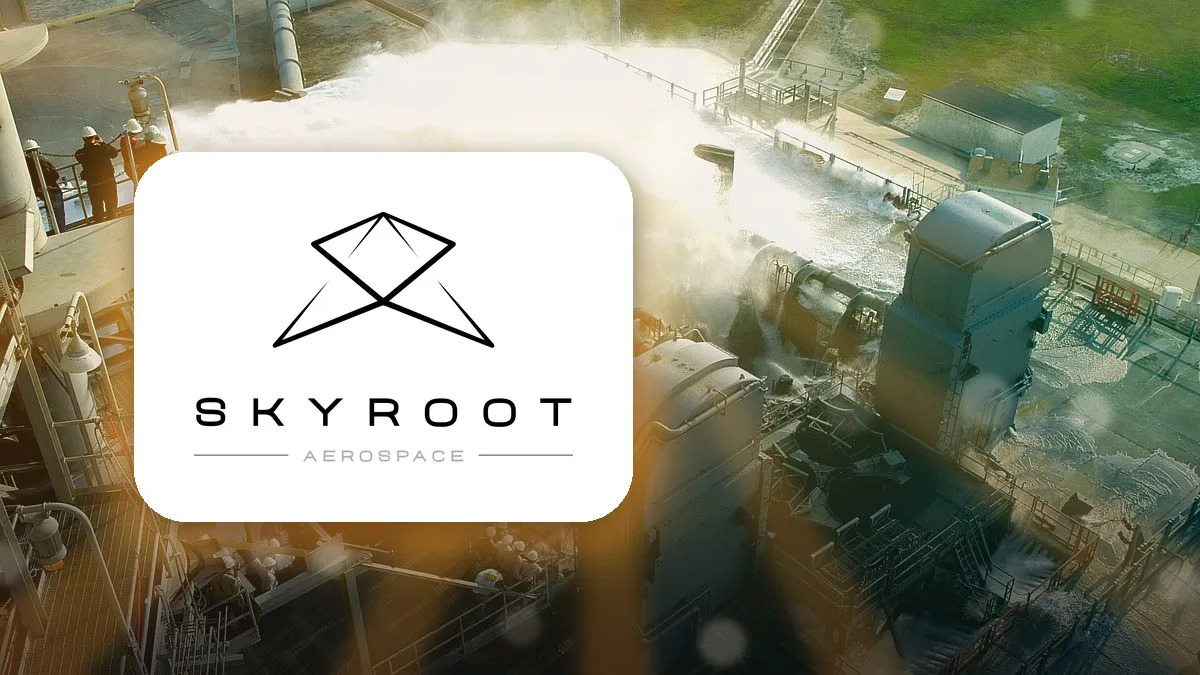
On July 18, 2026, a privately built Indian rocket reached orbit for the first time.
The Vikram-1 rocket lifted off from a launchpad in Andhra Pradesh.
It carried half a dozen small satellites to low-Earth orbit, about 280 miles up.
The rocket belongs to Skyroot Aerospace, a company based in Hyderabad. A payload is the cargo a rocket carries.
In this case, the payload was a set of satellites.
Key points
- Vikram-1 is a 72-foot rocket built and owned by Skyroot Aerospace.
- It carried satellites to orbit from Andhra Pradesh on July 18, 2026.
- This is the first time India has orbited a payload from a private rocket.
- Prime Minister Narendra Modi called it a defining moment for India's space journey.
So why is this launch such a big deal?
India's government-run space sector has a strong record.
In September 2014, its Mars Orbiter Mission entered orbit around Mars on the first try.
In August 2023, Chandrayaan-3 soft-landed near the moon's south polar region.
Private companies, however, had not been very active in space. Vikram-1 changed that.
Prime Minister Modi said private participation is opening new frontiers.
Union Minister of State Jitendra Singh watched the launch at the Satish Dhawan Space Centre.
He said, "For India, the sky is no longer the limit."
Who is the man behind Skyroot?
Pawan Kumar Chandana is the founder and CEO of Skyroot. He is 35 years old.
From 2012 to 2018, he worked as a rocket engineer at ISRO, India's space agency.
There he helped design the GSLV Mk-III and the Small Satellite Launch Vehicle. In 2018, he left to start Skyroot.
Today, the company employs 1,000 people. It has a valuation of $1.1 billion, which means its estimated market worth.
What happens next for India's space plans?
Skyroot is starting with lighter-lift rockets. These are smaller than SpaceX's Falcon 9, Falcon Heavy and Starship.
Starship alone can carry dozens of satellites from many customers.
The government also has its own timeline. India hopes to launch its first crew of astronauts in the first quarter of 2027.
It will begin building a space station in 2028 and hopes to complete it by 2035.
- September 2014Mars Orbiter Mission enters orbit around Mars on the first try
- August 2023Chandrayaan-3 soft-lands near the moon's south polar region
- July 18, 2026Skyroot's Vikram-1 becomes the first private Indian rocket to reach orbit
- First quarter of 2027India hopes to launch its first crew of astronauts
- 2028India plans to begin building its space station
- 2035Target year to complete the space station
Graphic: News Anek, from the facts in this report
Exam Corner
UPSC GS Paper 3 · Science and Tech: Private space sector
What's the news
Skyroot Aerospace's privately built and owned Vikram-1 rocket carried half a dozen small satellites to low-Earth orbit from Andhra Pradesh on July 18, 2026.
Background
- India's space sector has long been led by government-run agencies, with private companies less active until now.
- India's Mars Orbiter Mission entered orbit around Mars in September 2014, on its first try.
- India plans to launch its first crew of astronauts in the first quarter of 2027 and to finish a space station by 2035.
Facts for Prelims
- Vikram-1 is a 72-foot tall rocket launched from Andhra Pradesh.
- Skyroot Aerospace is based in Hyderabad.
- Chandrayaan-3 touched down in August 2023 near the south lunar polar region.
Content for Mains
- Significance: Shows private firms can now place payloads in orbit, widening India's space sector beyond government agencies.
- Main issue: Private players were far less active than government space programmes in India until this launch.
- Challenges: Private firms must build reliable rockets and compete with large global operators such as SpaceX.
- Way forward: Steady policy support and private investment can help India build a stronger commercial space ecosystem.
Practice question: Discuss the role of private players in India's space sector. What challenges do they face, and how can they complement government space programmes?
Prelims practice questions
Q1. Which rocket carried half a dozen small satellites to low-Earth orbit on July 18, 2026?
- GSLV Mk-III
- Falcon Heavy
- Vikram-1
- Starship
Show answer
Answer: C. Vikram-1, built and owned by Skyroot Aerospace, carried the satellites from Andhra Pradesh.
Q2. In which month and year did Chandrayaan-3 touch down on the moon?
- September 2014
- July 2026
- March 2027
- August 2023
Show answer
Answer: D. The article states that Chandrayaan-3 soft-landed in August 2023 near the south lunar polar region.
Key terms
- Payload: The cargo, such as satellites, that a rocket carries into space.
- Low-Earth orbit: A path around Earth at a relatively low height, close to the planet.
- Soft landing: Landing a spacecraft gently on a surface without crashing it.
More stories for exam preparation: UPSC Today
These points come from this news report. Check them with standard sources such as NCERT books and PIB before your exam.