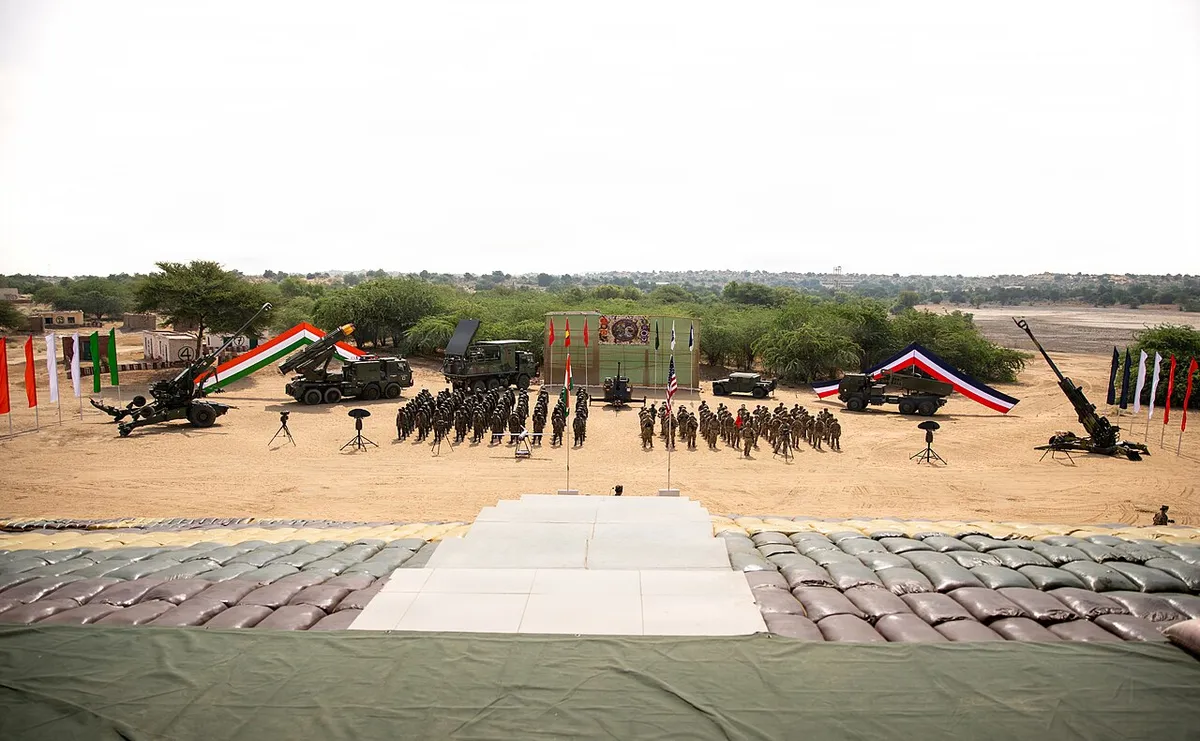
Japan's Self-Defence Forces are expected to hold live-fire military drills at Indian firing ranges.
This would be the first time. The training may include surface-to-ship missiles, which are fired at targets on the sea.
The arrangement is set out in a Letter of Intent, or LoI.
It is a written document that shows the shared intention of both sides.
It was signed in Tokyo on November 19, during the fourth India-Japan Foreign and Defence Ministers' Dialogue, also called the 2+2 meeting.
Key points
- Japan's forces may do live-fire training at Indian firing ranges for the first time.
- The LoI was signed in Tokyo on November 19, during the 2+2 meeting.
- Ministers agreed to speed up coordination, but no exercise schedule has been announced.
- Japan has limited space for missile testing and military training.
Who met, and what did they discuss?
External Affairs Minister S Jaishankar and Defence Minister Rajnath Singh met Japan's Foreign Minister Toshimitsu Motegi and Defence Minister Shinjiro Koizumi.
The talks covered regional security, defence manufacturing, maritime cooperation and the Indo-Pacific.
The two sides also discussed defence technology.
Singh described the approach as "Design with Japan, Make in India." Missile technology and UNICORN, a naval system, were also on the agenda.
UNICORN is Japan's integrated stealth mast for warships. It combines several antenna functions into one structure.
So why does Japan need space on other countries' ranges?
Japan has limited space for missile testing and military training.
So access to facilities in partner countries is valuable to it.
Tokyo reached a similar arrangement with Australia earlier in 2026.
Japan is also strengthening its missile capability.
Concerns about China's growing military presence in East Asia are part of the reason.
On March 31, 2026, Japan deployed the upgraded Type-25 Surface-to-Ship Missile at Camp Kengun in Kumamoto Prefecture.
It was the first time Japan deployed domestically produced stand-off missiles to its units.
What happens next?
The four ministers agreed to speed up coordination between their defence authorities.
- 1Letter of Intent signedSigned in Tokyo on November 19 during the fourth India-Japan 2+2 Dialogue.
- 2Defence authorities coordinateThe four ministers agreed to speed up coordination between their defence authorities.
- 3Live-fire drills at Indian rangesJapan's Self-Defence Forces are expected to hold drills, possibly including surface-to-ship missiles.
- 4Exercise scheduleNo schedule has been announced yet, so the timing and details of the drills remain unclear.
Graphic: News Anek, from the facts in this report
The goal is to put the LoI into practice. For ordinary Indians, this is mostly behind-the-scenes work.
But it widens how our armed forces can train and work with partners.
A schedule for the exercises has not yet been announced. So the timing and details of the drills remain unclear for now.
Exam Corner
UPSC GS Paper 2 · International relations: India-Japan defence ties
What's the news
Japan's Self-Defence Forces are expected to hold live-fire drills at Indian firing ranges, including surface-to-ship missile training. The arrangement was signed as a Letter of Intent in Tokyo on November 19.
Background
- A Letter of Intent is a written document that shows the shared intention of two sides to cooperate.
- The 2+2 dialogue brings together the foreign and defence ministers of both countries.
- Japan has limited space for missile testing, and made a similar arrangement with Australia earlier in 2026.
Facts for Prelims
- The fourth India-Japan 2+2 dialogue was held in Tokyo.
- Japan's Type-25 Surface-to-Ship Missile was deployed at Camp Kengun in Kumamoto Prefecture.
- UNICORN is Japan's integrated stealth mast system for naval warships.
Content for Mains
- Significance: Takes defence cooperation beyond joint exercises, opening new avenues for training and coordination.
- Main issue: Japan's limited missile testing space, and security concerns linked to China's military presence.
- Challenges: No schedule for the exercises has been announced, so implementation timelines remain open.
- Way forward: Faster coordination between defence authorities, building on the Make in India approach.
Practice question: Discuss how defence partnerships with countries like Japan can strengthen India's role in maintaining security in the Indo-Pacific.
Prelims practice questions
Q1. Where was the fourth India-Japan 2+2 dialogue held in November 2026?
- New Delhi
- Tokyo
- Canberra
- Kumamoto
Show answer
Answer: B. The Letter of Intent was signed during the 2+2 meeting in Tokyo on November 19.
Q2. In which Japanese prefecture was the Type-25 Surface-to-Ship Missile deployed?
- Kumamoto
- Tokyo
- Kengun
- Australia
Show answer
Answer: A. The missile was deployed at Camp Kengun in Kumamoto Prefecture on March 31, 2026.
More stories for exam preparation: UPSC Today
These points come from this news report. Check them with standard sources such as NCERT books and PIB before your exam.