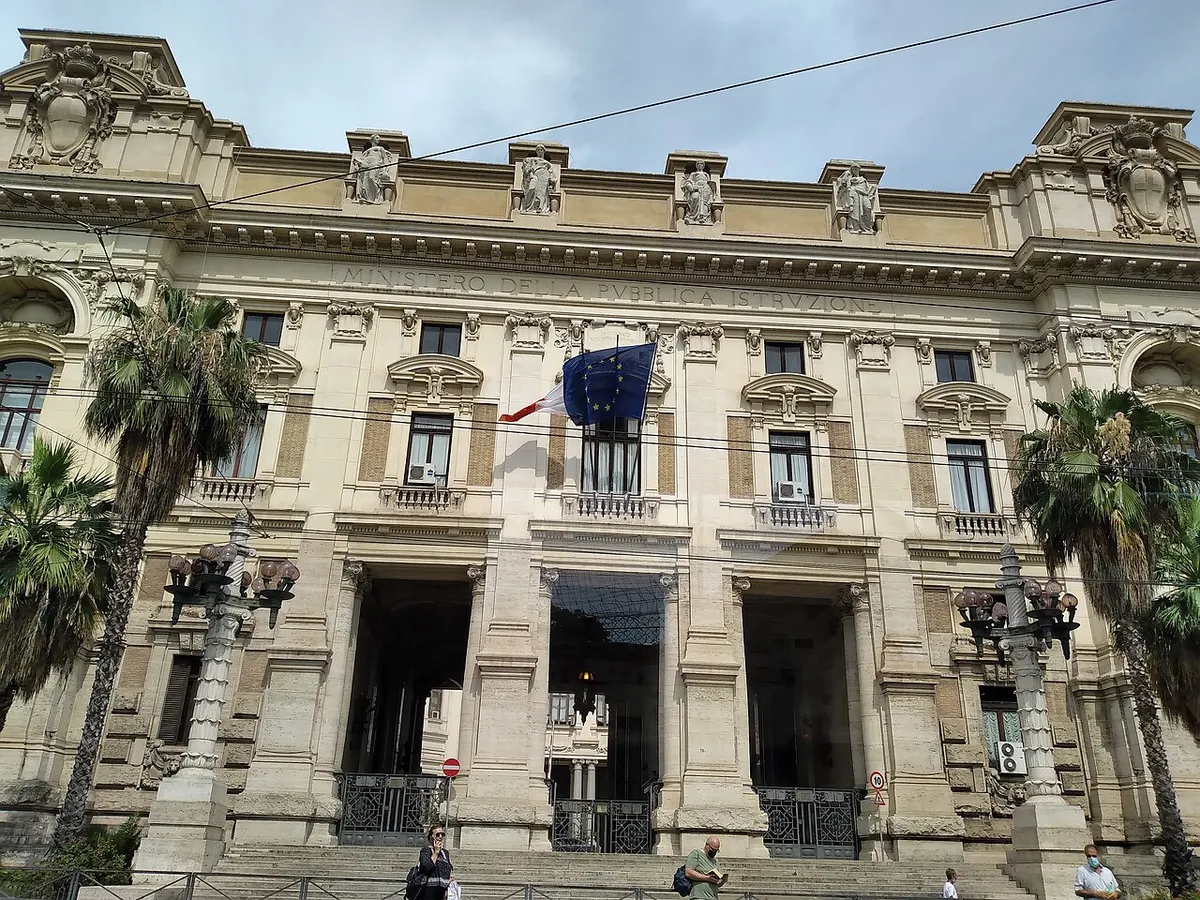
On Friday, 20 November, a student protest in Rome turned violent outside Italy's Ministry of Education.
Protesters threw paper bombs, firecrackers, glass bottles and other objects at the building.
The protest was part of a 24-hour general strike across Italy.
The Italian General Confederation of Labour (CGIL), the country's largest trade union, called the strike.
Grassroots unions took separate action too.
So why does this matter? It shows how worried many Italians are about wages, public services and money for schools.
Key points
- Protesters threw paper bombs, firecrackers and bottles at the Education Ministry in Rome.
- Police guarded the building. Students chanted slogans against Education Minister Giuseppe Valditara.
- The strike drew protests in more than 100 cities, and students joined in more than 45 of them.
- Air and rail services were excluded from the main strike. A separate rail walkout was planned.
What exactly happened outside the ministry?
Demonstrators also threw helmets, a road sign and an electric scooter at the building on Viale Trastevere.
Police were deployed to protect it.
Footage from the scene showed two young men sitting on the ministry steps.
According to local reports, the two appeared to oppose the violence as it unfolded.
What were the workers and students protesting about?
The strike focused on pay freezes, rising living costs, education funding and government spending.
Unions want higher pay, better working conditions and more money for health and education.
They also criticised the 2027 budget plan of Prime Minister Giorgia Meloni's government.
Unions say it does not ease the burden on households and workers.
Students want more investment in schools and universities.
Some demonstrators argued that money should go to public services rather than increased military spending.
What happens next for the strike and the protests?
Maurizio Landini, head of CGIL, said more than one million people took part in protests in more than 100 cities.
Graphic: News Anek, from the facts in this report
He said the people wanted the government to hear their voices.
The strike hit public and private sectors, including education, healthcare and local transport.
Bus, tram and metro services were cut or disrupted in several cities.
A separate rail walkout was due to start on Friday evening and continue into Saturday.
For many families, a pay freeze means the same salary buys less every year.