The International Court of Justice (ICJ) has found Myanmar guilty of genocide against the Rohingya, a Muslim minority group.
Genocide means trying to destroy a group of people because of who they are. The verdict was delivered on November 19.
The case was brought by The Gambia. It was about Myanmar's military operations in 2016 and 2017 in western Rakhine state.
For many Rohingya, the verdict is a moment of recognition after years of pain.
Key points
- The ICJ found Myanmar guilty of genocide against the Rohingya.
- The case was about military operations in 2016 and 2017 in Rakhine state.
- A Rohingya refugee in Delhi hopes India will treat refugees more kindly.
- India has not signed the UN refugee law or its protocols.
Who is Noorul Amin, and why is his story important?
Noorul Amin is 26 years old. He came to India in 2007 with his family, when he was just eight.
The family moved from Kolkata to Jammu, and then to Delhi.
In Delhi, they survived by collecting garbage and selling scrap.
Today Amin lives there with his wife, who is also a Rohingya refugee, and their three children.
Amin said the truth has now come out. He believes the whole world now knows what happened to his people.
What did the court say about the Rohingya?
The court noted that the Rohingya had faced persecution in Buddhist-majority Myanmar for decades.
Discriminatory laws and rules slowly took away their political and civil rights.
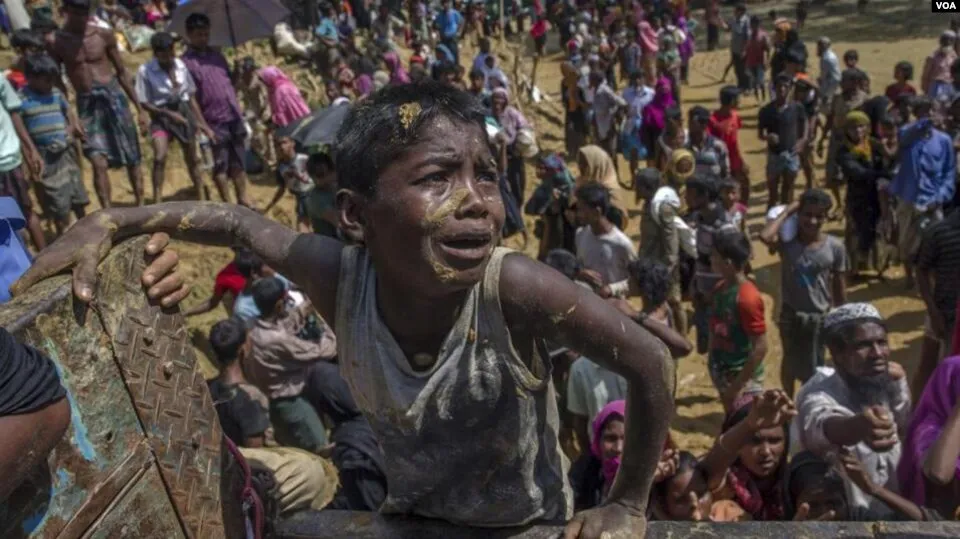
The ICJ said the 2017 military operations in Rakhine killed an estimated 10,000 Rohingya.
At least 700,000 fled to Bangladesh.
Graphic: News Anek, from the facts in this report
The story of Amin's wife shows this history. Her eldest brother was shot dead in 2017.
Her other brother has been in detention since 2023, and the family still does not know if he is alive.
So what does this mean for Rohingya in India?
Life has been hard for Rohingya refugees in India too.
Political and communal talk has labelled Bangladeshi migrants as infiltrators.
India has not signed the UN refugee law or its protocols.
The government says its existing laws for foreigners are enough to deal with refugees.
For a family that depends on daily work, every day is a struggle. The verdict does not change their daily life in India, but it gives them hope that their suffering is finally recognised.