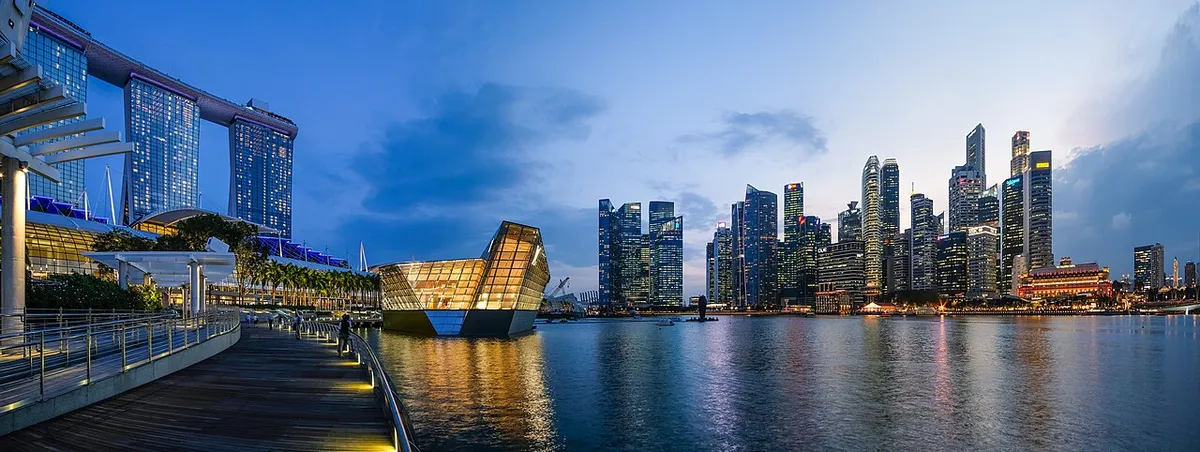
Chief Justice of India (CJI) Surya Kant has called for a two-way legal partnership between India and Singapore.
He said the link must open professional chances for lawyers and experts in both countries.
He spoke through a video message at a symposium in Singapore. The Indian Council of Arbitration (ICA) organised the event.
Its title was "India-Singapore: From Shared Legal Foundations to the Future."
The event marked 200 years since Singapore's Second Charter of Justice of 1826.
A charter is an old legal document that gives a court its powers.
Key points
- CJI Surya Kant wants legal cooperation to benefit both India and Singapore equally.
- Trade between the two countries rose from $6.7 billion in 2004-05 to $34.3 billion in 2024-25.
- As many as 178 Indian parties used Singapore's arbitration centre in 2025.
- Singapore's Law Minister said complex multi-contract disputes need better coordination.
So why does this matter for businesses?
Justice Surya Kant said dispute resolution is about trust.
Disputes are disagreements in business deals, and they are settled through arbitration or mediation.
He said a dispute clause may take only a few lines in a contract.
Yet it can matter a great deal when a deal runs into trouble.
He also said India offers a large market and many legal professionals.
Singapore brings an established framework for international commercial disputes.
How big is the trade relationship?
The CJI noted that trade grew from $6.7 billion in 2004-05 to $34.3 billion in 2024-25.
He used these numbers to show how ties have grown.
Singapore's Law Minister Edwin Tong said India remains one of the most important foreign users of the Singapore International Arbitration Centre (SIAC).
In 2025, as many as 178 Indian parties took part in SIAC arbitrations. That made India the third-largest foreign user.
What challenges did Singapore point out?
Tong raised the problem of complex deals with many linked contracts.
Related disputes can go to different forums and reach different results.
He asked how to keep arbitration based on the consent of the parties. At the same time, linked disputes must be solved well.
ICA President NG Khaitan credited Singapore's success to predictable rules, effective dispute resolution and strong enforcement of laws.
Explainer
What happened before
- Trade between India and Singapore grew from $6.7 billion in 2004-05 to $34.3 billion in 2024-25.
- The symposium marked 200 years of Singapore's Second Charter of Justice of 1826.
- In 2025, as many as 178 Indian parties took part in SIAC arbitrations, making India the third-largest foreign user.
Why it matters
Businesses and investors in India depend on clear and predictable ways to settle disputes with partners abroad. Singapore is an important centre for this work.
Exam Corner
UPSC GS Paper 2 · IR: India-Singapore legal cooperation
What's the news
Chief Justice of India Surya Kant called for two-way legal cooperation with Singapore. He spoke on Friday through a video message at a symposium in Singapore.
Background
- Dispute resolution means settling business disagreements without a regular court case, through methods such as arbitration and mediation.
- Singapore's Second Charter of Justice of 1826 completed 200 years, and the symposium marked this anniversary.
- India was the third-largest foreign user of the Singapore International Arbitration Centre in 2025.
Facts for Prelims
- The Indian Council of Arbitration organised the symposium in Singapore.
- Bilateral trade between India and Singapore rose to $34.3 billion in 2024-25.
- As many as 178 Indian parties were involved in SIAC arbitrations in 2025.
Content for Mains
- Significance: Predictable dispute resolution supports commercial relationships and investor confidence between partner countries.
- Main issue: Ensuring benefits and professional opportunities flow equally to both India and Singapore.
- Challenges: Complex deals with multiple contracts can send linked disputes to different forums with different outcomes.
- Way forward: Greater cooperation in mediation, training, technology and multi-tiered dispute clauses in contracts.
Practice question: Discuss how dispute resolution mechanisms like arbitration and mediation can strengthen India's commercial partnerships with other countries.
Prelims practice questions
Q1. Which organisation organised the symposium in Singapore where the CJI spoke?
- Indian Council of Arbitration
- Singapore International Arbitration Centre
- Supreme Court of India
- Reserve Bank of India
Show answer
Answer: A. The Indian Council of Arbitration organised the symposium, as stated in the article.
Q2. How many Indian parties were involved in SIAC arbitrations in 2025?
- 78
- 128
- 178
- 217
Show answer
Answer: C. The article states that as many as 178 Indian parties were involved in SIAC arbitrations in 2025.
Key terms
- Arbitration: A way to settle a dispute outside regular courts, where the parties agree to a chosen arbitrator's decision.
- Reciprocity: A situation where both sides give and receive similar benefits or treatment.
- Alternative Dispute Resolution (ADR): Methods like arbitration and mediation used to settle disagreements without a full court trial.
More stories for exam preparation: UPSC Today
These points come from this news report. Check them with standard sources such as NCERT books and PIB before your exam.