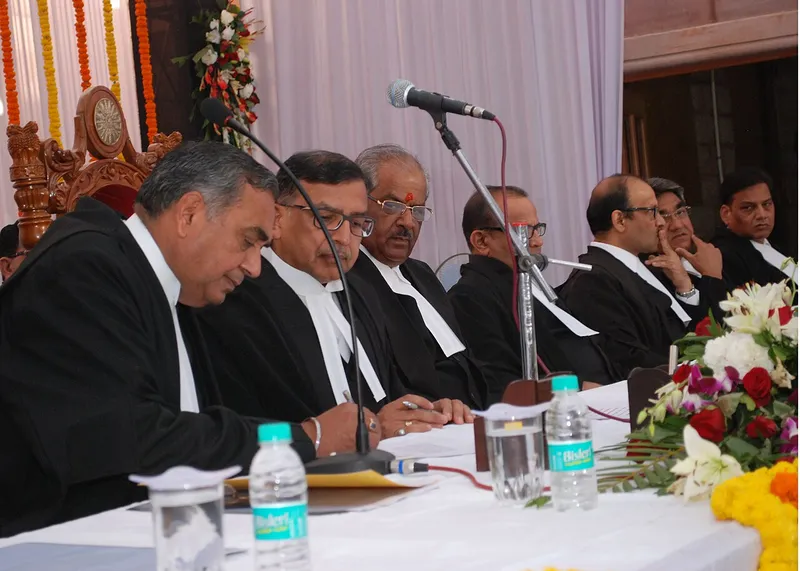
The Supreme Court has ruled that a grandson cannot claim a share by birth in property his father received during a family partition.
The judgment was delivered on 6 November.
The bench was led by Justices Augustine George Masih and Sunita Agarwal.
They dismissed an appeal filed by a man who wanted half of a plot of land in Chennai.
Key points
- The Supreme Court dismissed a grandson's claim to half of a 1,811 square foot plot in Chennai.
- The land went to his father in a 1994 family partition, so the court said it became the father's own property.
- The father sold the land in 1997. The grandson argued it was still joint family property.
- The court said a child does not get a birthright in property that becomes an individual's share after partition.
So what exactly was the dispute about?
The land first belonged to N. Ramakrishnan, the grandfather of the man who went to court.
In 1993, his daughter filed a suit asking for his estate to be divided.
The matter was settled by a compromise decree dated 3 February 1994.
Under it, the grandson's father received the disputed land.
The grandson was born in January 1994. In 1997, his father sold the land through two sale deeds.
The grandson, then a minor, filed a case through his mother. He asked for half of the property.
- 1993Daughter files suit seeking division of grandfather N. Ramakrishnan's estate.
- January 1994The grandson is born.
- 3 February 1994Compromise decree gives the disputed land to the grandson's father.
- 1997Father sells the land through two sale deeds.
- 6 NovemberSupreme Court dismisses the grandson's appeal for half the land.
Graphic: News Anek, from the facts in this report
Why does this ruling matter for ordinary families?
The grandson argued that the land was ancestral property.
He said he got a share in it by birth, which is called a coparcenary right.
The court looked at Section 8 of the Hindu Succession Act, 1956.
When a Hindu man dies without a will, his property goes first to Class I heirs.
These include his son, daughter, widow and mother.
A grandson is not on that list while his father is alive.
So the share that the father got after partition became his own, the court said.
What did the court say about the law?
The trial court first ruled in the grandson's favour.
The appellate court reversed that decision, and the Madras High Court upheld it.
The bench said, "The express words of Section 8 of the Hindu Succession Act, 1956 cannot be ignored and must prevail." The court also did not accept the grandson's other arguments.
Sources
- Mint: Hindu Succession Act, 1956: Can a grandson claim a share in property inherited by his father? Supreme Court clarifies
- Outlook India: Grandson Cannot Claim Share In Grandfather's Property Allotted To Father After Partition: SC
- Hindustan Times: Grandson can’t claim birthright in property after partition: Supreme Court