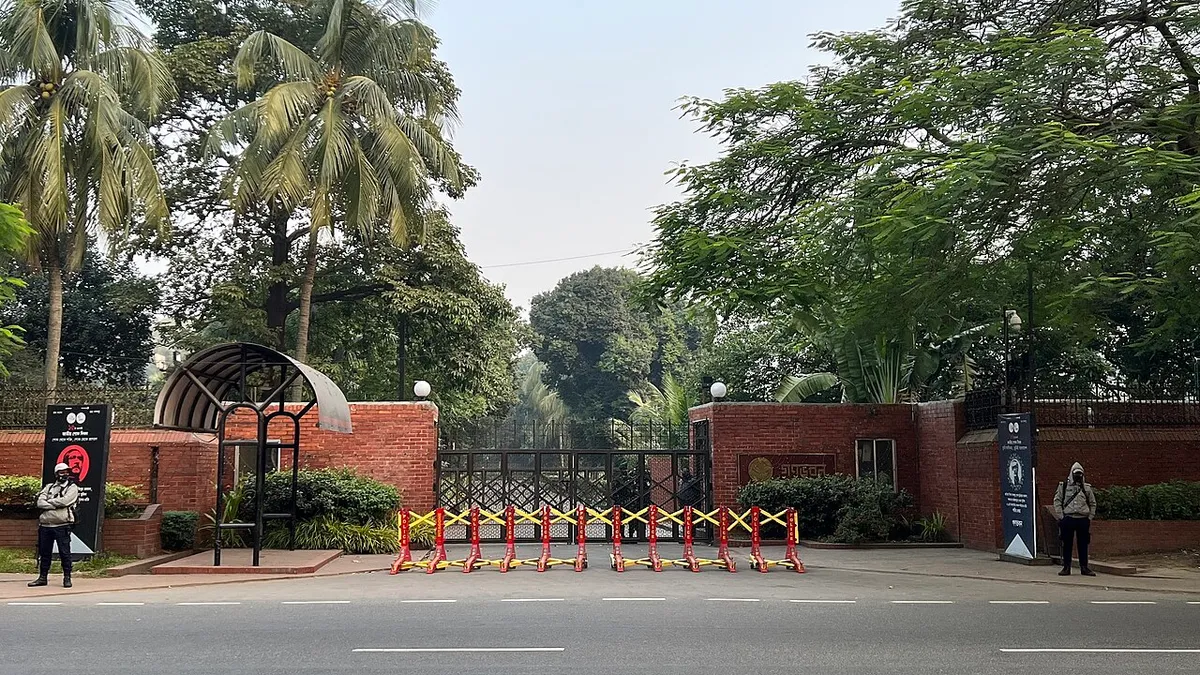
Bangladesh's government says former prime minister Sheikh Hasina has no plans to return home.
Chief prosecutor Md Aminul Islam made the statement on Monday, while speaking to journalists at his office.
Hasina has lived in India since she fled Bangladesh in August 2024.
Her lawyers have now written to Bangladesh's embassy in Delhi, asking for a new passport and a National Identity Card, or NID.
The lawyers said her existing passport and NID were reportedly cancelled.
They asked for fresh documents based on her Bangladeshi nationality. It was her first such request since she left in 2024.
Aminul called her recent moves a political stunt. He said she is not taking the legal steps needed to return.
He will explain the legal position at a briefing on Tuesday.
Key points
- Sheikh Hasina has asked for a new passport and identity card.
- Bangladesh's chief prosecutor says she will not return.
- She was sentenced to death in absentia last year, and she denies the charges.
- India is still examining Bangladesh's extradition request.
So when does she say she will return?
Hasina has said she plans to return around December. She said she would voluntarily surrender before a court.
- August 2024Sheikh Hasina fled Bangladesh and has lived in India since then.
- Last yearA war-crimes court sentenced Hasina to death in absentia.
- MondayChief prosecutor Md Aminul Islam said Hasina has no plans to return home.
- Around DecemberHasina says she plans to return and voluntarily surrender before a court.
Graphic: News Anek, from the facts in this report
Her aides say the date will be announced once the required formalities are complete.
She has also said she could be arrested, or even killed, on her return.
Still, she says she has to go, because her parents are buried in Bangladesh.
What is the case against her?
Last year, a war-crimes court sentenced Hasina to death in absentia.
That means the sentence was passed while she was not present in court.
The case concerns a deadly crackdown on the student-led uprising that ended her rule. She is accused of ordering it.
She denies the charges and calls the proceedings politically motivated.
On Thursday, State Minister for Foreign Affairs Humayun Kobir rejected any possibility of issuing her a travel document or passport.
What happens next, and what is India's role?
Bangladesh is pursuing her return through diplomatic channels. It has repeatedly asked India to extradite her.
Extradition means formally handing over a person to another country.
India says it is examining the request. It also says it intends to engage constructively with Bangladesh's new government.
No decision on handing her over has been announced.
So why does this matter to India?
Because the request directly involves relations with a neighbouring country, and the decision is still pending.
Explainer
What happened before
- Sheikh Hasina fled Bangladesh in August 2024, after a student-led uprising ended her Awami League government.
- Last year, a war-crimes court sentenced her to death in absentia over a deadly crackdown on the uprising. She denies the charges.
- Bangladesh has repeatedly asked India to extradite her, and India says it is examining the request.
Why it matters
Her case is a live issue between Bangladesh and India, two neighbouring countries. It also raises questions about whether she will return.
What to watch next
- Bangladesh's chief prosecutor will explain the legal position at a briefing at noon on Tuesday.
- Hasina has said she plans to return around December, and her aides say the date will be announced after formalities.
Exam Corner
UPSC GS Paper 2 · IR: India-Bangladesh extradition
What's the news
Bangladesh's chief prosecutor says former prime minister Sheikh Hasina has no plans to return, despite her request for a new passport and identity card. India is still examining Bangladesh's extradition request.
Background
- Hasina fled Bangladesh in August 2024 after a student-led uprising ended her rule, and she has since lived in India.
- A war-crimes court sentenced her to death in absentia last year over a deadly crackdown on the uprising.
- Bangladesh has repeatedly asked India to extradite her, and India says it is examining the request.
Facts for Prelims
- Hasina fled to India in August 2024 after a student-led uprising ended her government.
- She was sentenced to death in absentia by a war-crimes court.
- India's Ministry of External Affairs says the extradition requests are being examined as part of its established processes.
Content for Mains
- Significance: Extradition requests between neighbours affect diplomatic ties and the handling of former leaders facing charges.
- Main issue: Bangladesh wants Hasina returned, while India has not yet announced any decision on handing her over.
- Challenges: Hasina denies the charges and calls the proceedings politically motivated, which makes the dispute harder to settle.
- Way forward: Diplomatic channels and established legal processes will guide how both countries handle the request.
Prelims practice questions
Q1. Which country has repeatedly asked India to extradite Sheikh Hasina?
- Nepal
- Bangladesh
- Sri Lanka
- Myanmar
Show answer
Answer: B. The article states that Bangladesh has repeatedly asked India to extradite her.
Q2. Which court sentenced Sheikh Hasina to death in absentia?
- A tax tribunal
- An election commission
- A war-crimes court
- A consumer forum
Show answer
Answer: C. The article states that a war-crimes court sentenced her to death in absentia last year.
Key terms
- Extradition: The formal handing over of a person accused or convicted of a crime from one country to another.
- In absentia: A court decision made when the person is not present in court.
- National Identity Card: An official card that shows a citizen's identity, used for many government services.
More stories for exam preparation: UPSC Today
These points come from this news report. Check them with standard sources such as NCERT books and PIB before your exam.